Michael Bross Interview: Recollections of an Industry Veteran (May 2007)
Michael: What were your first steps into the game industry and how did you get your first contract? What was the first game you composed music for?
Michael Bross: I first began working as a composer back in 1992 for a company called Paragon Software. My first game there was XF5700 Mantis Experimental Fighter. I was chosen out of 125 other composers and was hired for the position.
Michael: What was your first score that you were proud of?
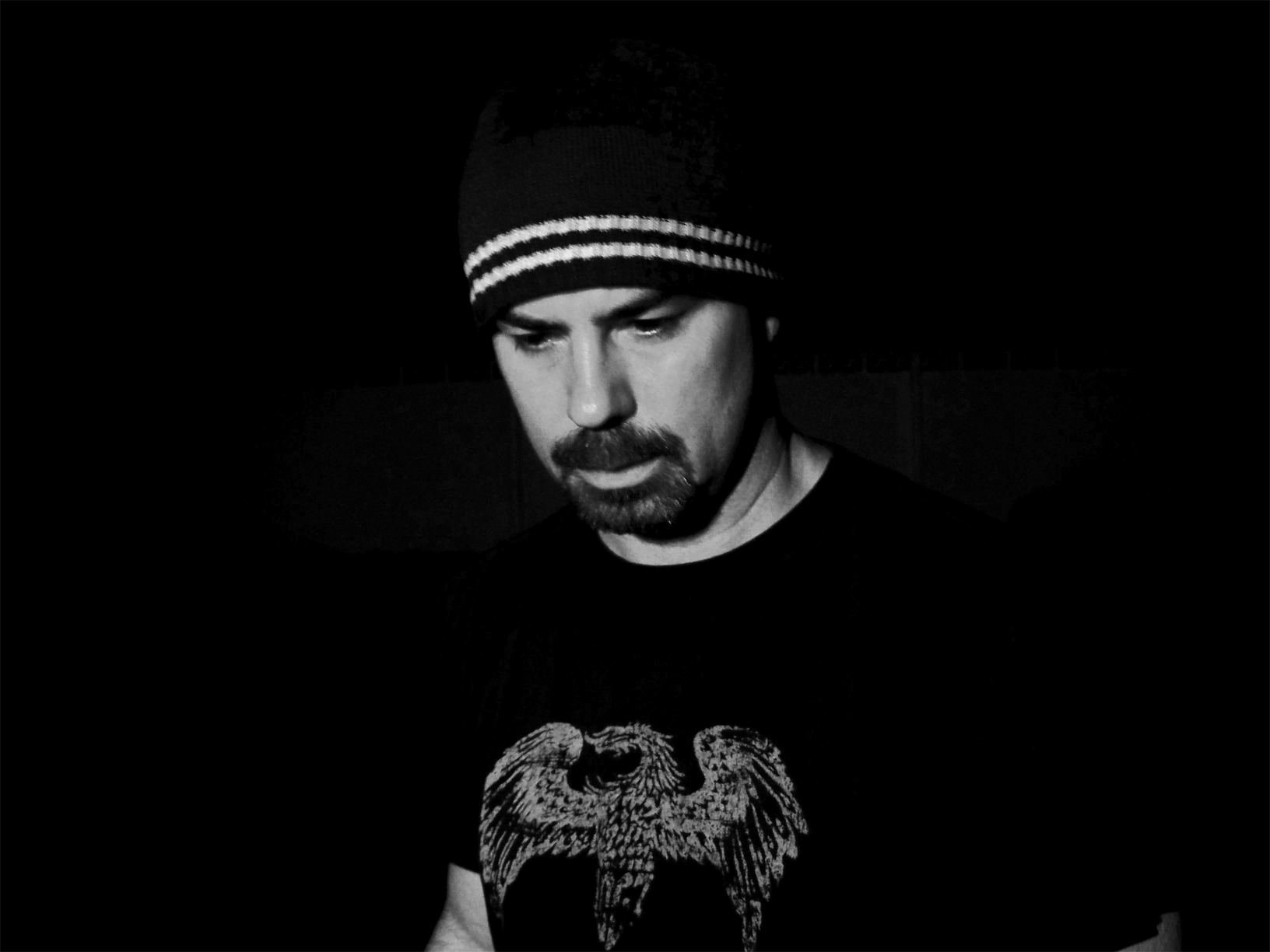 Michael Bross: I worked on a series of games for Microprose, starting in 1993. There were two early games where I was proud of the music: Return of the Phantom and Dragonsphere.
MIchael: What's the very first thing you do when you start to write a new piece? Could you give us an estimate of much time it takes you to create a single composition?
Michael Bross: It depends on the project. If it is a video game project, I will tend to spend time coming up with basic music themes or music sketches first. I also like to create a library of source material that I can work with later when composing. That library can consist of many things… percussion tracks, ambient textures, notated musical ideas, sounds that are highly sound designed etc. If I'm working on an album of my own, I tend to just dive into creating music itself and designing sounds as I go.
I can spend anywhere from two days to four months on one composition. I usually work on several compositions at once. Sometimes I'll start working on a piece for a day or so and come back to it a month later. Sometimes the music comes to me easily and other times I'm the classic tortured artist. In those instances, I may re-write a piece two or three times and make many changes before I'm happy with it. I have trouble sleeping until the music shines. Sometimes that will take a few weeks. You can imagine that there are times when I don't get much sleep.
Michael: What hard- and software do you use to write music? Which instruments do you play and which ones would you like to learn to play?
To finish project after project, the employees sometimes toiled away through 12-14 hour days for weeks at a time. Some even slept at the office on occasion to keep up with the impossible scheduling. They weren't happy doing this, but they were loyal. Due to their devotion, the company grew incredibly and within 2 1/2 years time, it went public.
The president made a lot of money from this. Soon after, he left the company. He retired at the age of 36.
None of the employees gained much wealth. Some who were instrumental in the early success of the company were eventually laid off. They all still work for a living. And to this day none of them are driving Lamborghinis.
Michael Bross: My studio is set up in a simple manner. I use Logic Pro for all my composing and use many of the soft synths and plugins that came with that program, as well as a number of other soft synths. Recently, I picked up a Microkorg synthesizer to use in my studio and that is the only hardware synth I have right now. I also have 2 preamps that I use a lot - the Avalon 2022 and the Universal Audio LA-610. Recording acoustic sources is an important part of my work. I have guitars, electric basses, all kinds of percussion and trumpets that are in my studio. I also like to record sounds that aren't really musical instruments. I'll sometimes use pots and pans from my kitchen or anything that I can make a sound with. For my upcoming projects, I plan to use more live musicians as part of my work.
I first started playing trumpet when I was 7 years old. I don't play that instrument too much anymore, but I also play keyboards, percussion and some guitar.
Michael: We know that you liked drawing when you were a kid. Are you still drawing these days? Did you have any other hobbies in your childhood?
Michael Bross: Yeah, that's right. I loved to draw when I was a kid, but I had some very uninspiring teachers, so I lost my way. Luckily, I had a great music teacher and that was the path I followed. I was bound to be creative within some medium. But back to your question… no, I can't really draw that well. I might doodle on a notepad if I'm bored in a meeting, but that's about it. I leave drawing to the real artists. :)
Michael: Do you have a degree in music?
Michael Bross: I have a Bachelor of Arts in Music Performance from Duquesne University in Pittsburgh, Pennsylvania in the U.S.
Michael: Tell us a bit about your Everything Is New album. How long did it take you to create it and what where did you derive your inspiration from?
Michael Bross: It took me about a year to create the album. I started working on it in a hotel room when I first came to Los Angeles. After six months, I didn't like the direction of the music I was creating, so I threw everything away and started again. So, the music you hear on that album really took about six months to create, but I spent a year on the whole project.
Back in the 1970's, he had recorded with Chic Corea, Jack DeJohnette, Dave Holland, Pat Martino and many other jazz giants. Eric was one of the greatest musicians I had ever heard.
Once a week for a number of semesters, I was in his improvisation class with four other musicians. Basically, we played and improvised for about two or three hours during the class. Eric always played with us.
Once in a while a professor in the next room would angrily knock on our door and ask us to keep it down. Our room was cramped and hot. It wasn't much of a classroom.
Sometimes one of us would turn off the light without Eric's knowledge (since he was blind). It was completely dark and there were no windows. Then we'd all play together and be blind with him. The lack of eyes forced us to "see" everything with our ears. We seemed to play better this way.
I sometimes think he could tell when the light was out by the way we played.
Of course, I love electronica and listen to a lot of it, so that was definitely an influence. I love film, film soundtracks and sound design in film, so those are influences, too.
Michael: Some tracks on Soul Fragments and Everything Is New feature vocal samples. Have you ever thought about recording a complete song with session vocalists, for example?
Michael Bross: That's a good question. It's something I've been thinking about more lately. The human voice is lovely and it's so flexible. My new album will have more vocals on it and I've already recorded some compositions that rely on voice more, though I don't use the voice in traditional ways. I'm not sure about lyrics. The album is still a work in progress, so let's see where things go. I might plan to use some vocalists on a couple of the tracks I'm working on right now.
Michael: Are there any particular vocalists you would like to work together with?
Michael Bross: I'd really love to work with Elisabeth Fraser. I heard her on one of Massive Attack's albums, Mezzanine, several years ago and her voice made me melt.
Michael: Are there any games whose music you've enjoyed, or any composers whose work attracts you?
Michael Bross: Yeah, I like the music from F.E.A.R. and I also like the music from Guild Wars. I like some of Jeremy Soule's work and also like the work of certain film composers - Hans Zimmer, Cliff Martinez, Ennio Morricone and Thomas Newman. This is just the tip of the iceberg as to what I listen to, though.
Michael: We guess you ride a car :) What kind of music do you listen to while driving?
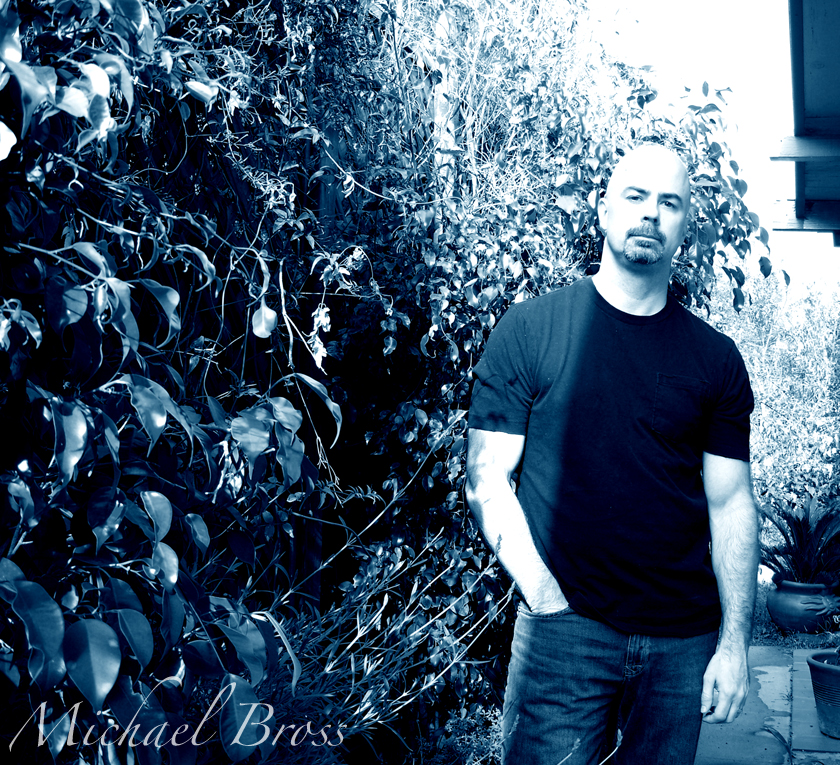 Michael Bross: In Los Angeles everyone has a car. It's almost impossible to get around without one. And like many people who live in LA, I spend more time than I'd like driving around, because of all the traffic. The one saving grace is that I get to listen to music. I'm always throwing new music on my iPod to take with me and listen to. I'm listening to something new all the time. This month I've been listening to more electronica and classical. This is a sampling of what I've listened to in the last week... Electronica: Lusine, Deadbeat, Loscil, UNKLE, Twerk. Some classical music: Erik Satie, Mussourgsky, Stravinsky, Sibelius. On the heavier side, I've been listening to Marilyn Manson. I've also been checking out some other things that don't really fall into the genres I just mentioned. Artists like Konono No. 1, The Bug, Rhodopea Kaba Trio, and Michael Stearns.
Michael: Have you worked on any projects that took particularly long to complete? Usually, what's the time frame for the sound and music design on a game? With your industry experience, you must have some funny anecdotes to tell...
Michael Bross: Every project has been different. I've gotten anywhere from three months to three years to compose the music. In the last five years though, I've been working on projects where I get a couple of years to work on the music.
Let me tell you a brief, humorous story since you asked. On one of my early game projects that I composed music for, there was a guy on the team who created sound effects for that game. I don't want to call him a sound designer because he had no talent at the craft and was very lazy. He liked to avoid work by going into the bathroom and locking the door to hide from the producers. Then he would stay in there for over an hour. I'm not sure what he did in there for a whole hour, but my guess is that he would go into the bathroom to sleep.
Michael: Before writing the music for Oddworld: Munch's Oddysee, did you listen to Ellen Meijers' soundtracks for the original Oddworld games? How did you adapt musically to the mysterious and weird universe of Oddworld?
I used to have to play a juggling act with the electric, gas, water and phone companies by calling them to convince them not to turn off the service since I wasn't able to pay.
In one particular instance the water company did shut the water off. What I didn't realize was that my apartment's water was tied to to the 3 apartments around me. So, everyone else had their water shut off, too. My neighbors were all pissed. I couldn't blame them and felt pretty bad about it. I had to scrape the cash together to make the payment so everyone had water again.
It wasn't a good time for me and I never would want to go back to that again.
Michael Bross: I didn't really listen to the music from any of the earlier Oddworld games. In general, the music in previous games did not influence me that much. The big influence really was spending time with the director, Lorne Lanning, to understand what he wanted from the music. Lorne can be very demanding and has high expectations when it comes to quality work, but it's also rewarding to work with him for that reason. He pushed for all these sometimes strange but usually relevant ideas that required much extra effort from me, but I enjoyed that challenge.
MIchael: Do you think you managed to capture the soul and atmosphere of the series?
Michael Bross: Yes, but I think that I captured it much better on Stranger's Wrath than Munch's Oddysee. The issue with Munch's Oddysee is that I had a very small amount of time to compose the music and the technical capabilities of the game were limiting from an audio standpoint, so I didn't really get the chance to do everything I wanted to do.
Michael: How many minutes of music did you write for Oddworld: Stranger's Wrath?
Michael Bross: I estimate I wrote about five hours of music for Stranger's Wrath. Most games don't have that much music. I still wished that I could have written more for it.
Michael: Will all this material be included on the soundtrack release?
Michael Bross: All the important tracks will be on the soundtrack album and there will be over 50 tracks released. That's a lot of music. Like any movie or game, though, not all music is suited to be on a soundtrack album. As an example, some of the music that I created for certain cinematics was purely background and is not that exciting to listen to when heard without the visuals.
Michael: Developers Oddworld Inhabitants are now becoming movie makers. Do you have any plans in working on their future projects?
Michael Bross: I got together with Lorne Lanning (Oddworld's creator) a few weeks ago, and he and I keep in touch on a consistent basis. I consider him to be like a big brother and a friend. At this point, my focus is on my current projects, but I believe that in the future my path will cross with Lorne's again.
Michael: Why have you decided to dedicate your life to music?
Michael Bross: I believe that I would have been an artist one way or another. It's my calling. Music was the path that was available to me when I was young and I connected with it.
 Michael: Who was the biggest musical influence at the beginning of your career?
Michael Bross: The first sound that blew me away was the music of The Beatles. I was watching TV one afternoon as a kid, and they were re-running the Help movie. It was long after The Beatles had broken up as a band, but the music was powerful. Concerning people who were personally in my life, I had a music teacher in high school who was an amazing teacher.
Michael: Have you ever performed in a band?
Michael Bross: I played in a number of bands right after college, though I don't really do that anymore because I love working in a studio much more.
Michael: The biography on your website is missing some key info. Could you tell us your date and place of birth?
Michael Bross: I was born in Western Pennsylvania in a very small town. The town I grew up in only has a population of 3,000 and is called Sheffield. My birthdate is… well… ah, you ask me for so many secrets. Some I must keep to myself. ;-)
Michael: Have you collaborated with other composers during your career? If so, how did you find the experience of creating music as a team?
There were a few times that I would forget to lock the bicycle to a pole at the entrance of the building. On one of those days, a homeless man came along, hoisted the bicycle above his head and threw it into the 6-lane expressway which was 30 feet below. I chased after him and caught up. He turned to me and yelled, "Well, what the f--k are you gonna do about it?" Then he walked away.
He was right. I returned back to the office and a fellow employee and me retrieved the bike from the busy highway.
Michael Bross: I've never really collaborated with other composers on any game soundtracks. Lately, though, I've been working with a couple of composers on some recording projects. I'm not sure if that material will ever be released, but I've been enjoying the process of working with other artists. The good thing about collaboration is that it forces me to create music differently than I would if I were working alone.
Michael: If you are at freedom to speak about future projects, we would love to hear about them.
Michael Bross: I'm working on several things at once. Right now I'm creating music for a new album that I plan to release this year. I'm also working on a smaller sized release which will probably end up being an EP-sized recording. I'm not sure when that will be finished.
On the game side, I'm involved with Red 5 Studios as their audio director and composer. Red 5 has not officially announced the game yet so I can't say much about it, but I can tell you it is an MMO. The people who started that company were key producers and directors on World of Warcraft. Red 5's MMO has been an exciting project to work on and I plan to write a lot of music for it.
I'm also involved in starting up a small record label called Deep Lever. It will be mostly dedicated to releasing my music, though there is a possibility that other artists may be released through it in the future.
Michael: Your music usually features very rich sound design. How do you create these sounds?
Michael Bross: All of my experience as a sound designer has influenced the way I create music. I always try to think about the emotional impact that a piece of music is going to make on a listener. To me, music is about communicating and connecting on a deeper level with other people. It's also about speaking with a unique voice. Bringing sound design concepts into the process of making music is what helps me achieve that.
MIchael: Looking into the future, how do you think the game music industry is going to develop? Will there be a place for lone freelancers or will large studios and teams play the leading role?
Michael Bross: The good news is that the quality of music in games is getting better and better, and I think that trend will continue. As far as who will be creating that music, I think it will be more like the film industry where much of the music comes from freelancers.
Michael: What advice can you give to aspiring composers?
Michael Bross: Creating great music is hard work and it takes a long time to nurture a unique sound. You have to live and breathe music to create great compositions. It requires much persistence to make a living from music and you may have to make sacrifices along the way in other areas of your life. Understand, too, that getting along with other people is important to success. When writing music for a video game or a film, you must remember that you are part of a team. It's important to know how to collaborate with others. Some composers look at collaboration as a threat to their own artistic vision, but I look at it as a way to change and grow artistically.
Michael: You now have the unique opportunity to say "Hello" to all Russian people! Yeah, yeah… bears, KGB agents and hard-drinking red-nosed brutal men with a Russian doll in one hand and a bottle of pure vodka in the other are among them as well… ;)
Michael: Ha, ha. That's a funny thing you've just said, which shows what I believe: that whenever I've encountered the Russian people, they have a great sense of humor and also warm hearts.